Amongst the greatest shocks was that the U.S. fared worse than the majority of other nations, with more than29 million cases and nearly 530,000 deaths as of this writing.
Minimizing the threat and sidelining experts. Trump dismissed it as no even worse than the flu and said the pandemic would be over by Easter.
” One thing that should not have actually been done is people downplaying the infection,” Perlman states. “The Trump administration truly tightly controlled what [the CDC] could put out,” states Angela Rasmussen, a virologist at the Georgetown University Center for Global Health Science and Security.
Slow and flawed screening. The CDC developed its own test for the virus rather than employing a German-developed one utilized by the World Health Organization The Food and Drug Administration was sluggish to authorize tests made by personal business, says Caitlin Rivers, an epidemiologist at the Johns Hopkins Center for Health Security.
Testing accessibility has actually enhanced but stays unequal. Some specialists have argued for using prevalent rapid antigen testing, a type that is cheap, does not need advanced laboratory processing and could be done in your homes, schools or workplaces. However some scientists still have issues about the accuracy of these tests, and the FDA has actually been sluggish to approve them
Insufficient tracing, isolating and quarantines. The timeworn techniques of fighting a contagious disease– screening people who may be ill, tracing their contacts, and separating or quarantining those who are favorable or exposed– worked for COVID.
Complicated mask assistance. The CDC altered course and suggested fabric face coverings in April In these instructions, experts pointed to an absence of premium proof for mask use.
Even after health professionals reached an agreement that masks were effective, Trump refused to set an example by wearing one in public. Instead he mocked individuals who used them, and many of his supporters declined masks. “I do not think it should ever end up being a political issue,” Rivers states. “It’s a simple public health intervention.” A study in Nature Medication released online in October approximated that universal mask wearing might have conserved nearly 130,000 lives throughout the fall and winter season of 2020–2021 Most states did ultimately institute mask requirements, and Biden has made them mandatory in federal government structures and on interstate transit. Yet several states, such as Texas and Mississippi, have actually just eliminated mask mandates and other constraints completely. “We’ve seen this happen over and over once again: Where the infection chooses back up, they execute more limitations in various states and localities. It goes down a bit, and after that they just open back up once again instead of saying, ‘Hey, you understand, maybe this ended up being a huge issue in the very first place because we opened back up,'” Rasmussen says. “We haven’t appeared to gain from our mistakes.”
Early in the pandemic, U.S. health authorities believed the virus spread primarily by direct contact or relatively big beads from a neighboring cough or sneeze– not by far smaller sized droplets, called aerosols, that linger in the air. The latter– which critics have dubbed “hygiene theater”— continues to be a focus of numerous workplaces and organizations.
Structural bigotry fueled health inequities. The pandemic exposed and intensified deep-rooted racial and economic inequities in health and health care. Black and Hispanic individuals and other people of color were sickened with, and died of, COVID at disproportionately high rates. Many people in Black and brown neighborhoods had actually currently long suffered from high rates of underlying conditions such as weight problems and diabetes as an outcome of inadequate health care, lack of access to nutritious foods and outdoor area, and higher exposure to pollution. They also consist of a big portion of vital workers in frontline markets with a naturally high threat of COVID exposure, such as nursing houses, meatpacking plants and restaurant cooking areas. The uneven death toll is a wake-up call that far too many people of color absence access to preventative health care, along with defenses such as paid authorized leave or danger pay. “I do think the pandemic has laid bare some of those inequalities,” Rivers says. Public health specialists have actually been tackling this problem for a long time, she notes, including, “we require to draw on these lessons about underlying vulnerabilities from other disciplines that have such a deep understanding of how neighborhoods are affected and how to engage successfully with hard-to-reach communities.”
Decentralized action. The U.S. government’s structure indicated that much of the pandemic reaction was left as much as state and local leaders. In the lack of a strong nationwide method, states implemented a patchwork of largely uncoordinated policies that did not efficiently reduce the spread of the virus. This triggered unexpected, massive spikes of infections in many regional outbreaks, placing huge strain on healthcare systems and leaving no area untouched by the illness. “Every district, every county, every state could make decisions and keep them to themselves,” Gandhi states. “And we just have irregular applications of public health recommendations in a way that I can’t envision any other country does. The Trump administration has actually been extensively criticized for how the pandemic played out here. Gandhi adds that the U.S. federal government’s decentralized nature would likely have actually been a barrier under any president.
What Went Well
Despite the numerous mistakes and bad policy options in the U.S. response, there were some incredible success stories, too.
Vaccines. Less than a year after the virus was genetically sequenced, 2 vaccines– one made by Pfizer and BioNTech and another established by Moderna– were discovered to have roughly 95 percent efficacy in preventing symptomatic COVID and were authorized for emergency situation use in the U.S.
However the remarkable success in creating vaccines is tempered by the reality that most of the world still lacks access to them. And early rollout efforts in the U.S. had a slow and stumbling start, mainly because the federal government did not offer states with the resources for distributing the vaccines. Further, Black and Hispanic individuals are being vaccinated at far lower rates than white people. And more work is required to overcome vaccine hesitancy in some populations, consisting of Republican citizens. The rate of vaccinations is choosing up, and Biden has said the country is on track to have enough vaccine doses for every U.S. adult by the end of May, fueling promise of a return to some normality in the coming months.
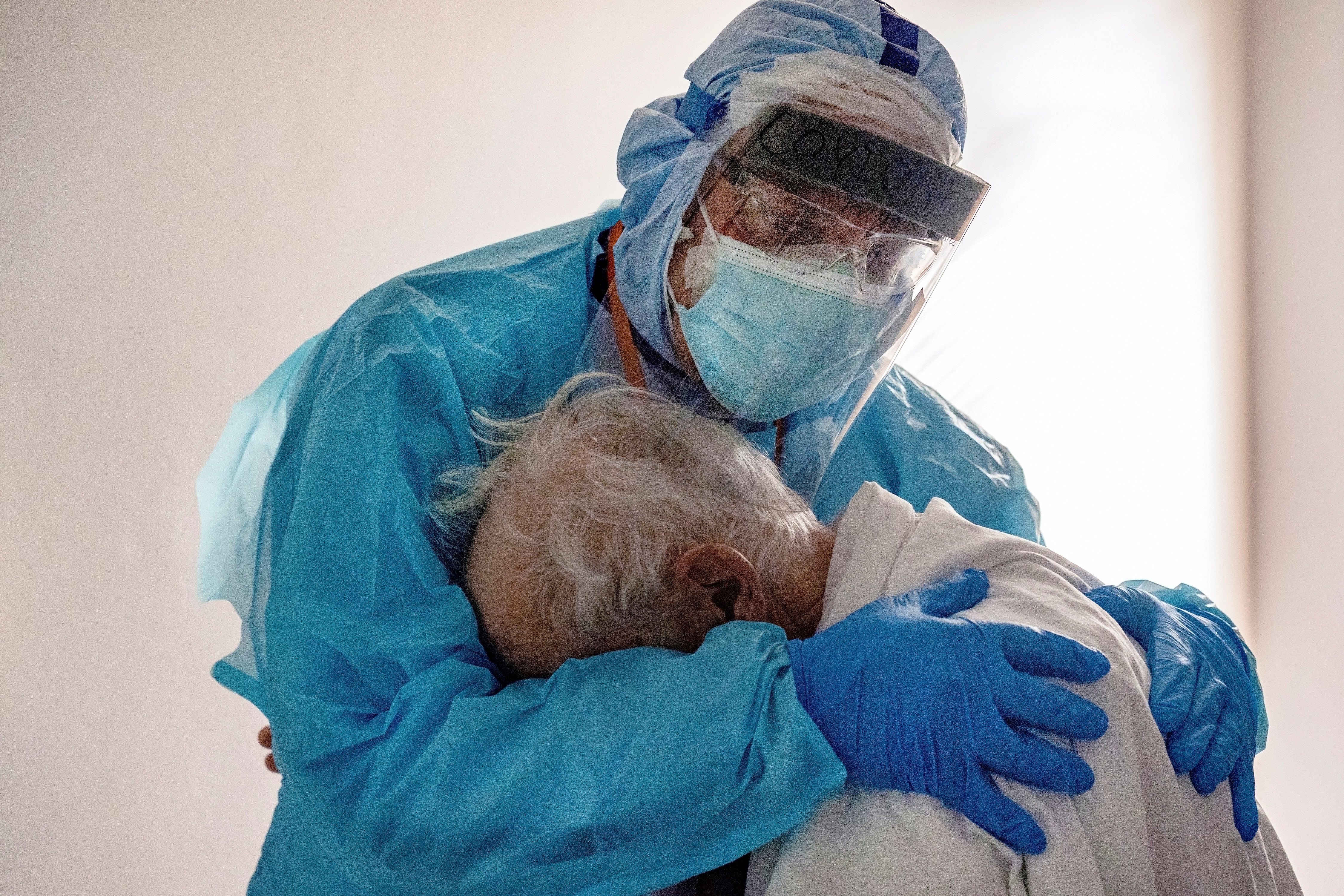
Brave efforts of health care employees. Faced with unmatched levels of sickness and death, health care workers stepped up and risked their lives to care for COVID clients. Nurses, assistants and orderlies took care of the senior and most susceptible people as the infection damaged retirement home Paramedics reacted to calls at all hours of the night. Doctors, nurses and other hospital staff comforted passing away patients as they had a hard time to breathe– and held their hand when they bid farewell over video calls to relative who were not allowed the room with them. With time, physician discovered better methods for treating the disease: these ranged from pharmaceuticals such as steroids and monoclonal antibodies to low-tech interventions, consisting of “proning,” or simply turning some clients onto their stomach so they can breathe more easily. Even as assisted living home and health centers ended up being overwhelmed with COVID clients, hardworking personnel kept showing up, shift after shift, facing down fear, fatigue and misery.
The public (mostly) did its part. Studies show the bulk of people wear masks when they go out, Johns Hopkins’s Rivers says.
Fighting false information. When Trump made unsupported claims about security levels or mask wearing or suspicious COVID “treatments,” journalists and high-profile scientists such as Anthony Fauci rapidly set the record directly.
Lingering Questions
As the world passes this 1 year turning point in the pandemic, many unknowns remain.
What will occur with the new variations? Numerous novel strains of SARS-CoV-2 have actually emerged that might threaten progress against the disease. An alternative called B. 1.1.7, first recognized in the U.K., is deadlier and more transmissible than the original– and it is on track to end up being the dominant variant in the U.S. this spring. Another version that was initially identified in South Africa, called B. 1.351, has anomalies that appear to help it to a minimum of partially avert a few of the vaccines. A third version that was first seen in Brazil, called P. 1, has actually overrun parts of that country and likewise includes worrisome anomalies. Currently these variants remain in a race with the vaccines, and researchers hope adequate people can be vaccinated rapidly enough to outmaneuver the new stress. Some vaccine makers are already working on booster shots, ought to they be needed.
How long will resistance last? The duration of resistance to COVID– whether from natural infection or vaccination– remains unknown. A big research study showed that people who had recovered from infection still had antibodies, in addition to so-called memory B cells and memory T cells, 6 to 8 months later on A variety of reinfections have occurred with a few of the brand-new variations, nevertheless. The CDC recently launched standards specifying that, with a couple of exceptions, fully immunized people who are exposed to the virus do not need to quarantine if they do not show symptoms. Time will inform whether vaccination supplies resistance that lasts months or years and if booster shots will be needed.
Why do some individuals become COVID “long haulers”? A particular portion of people who get COVID develop sticking around symptoms that continue for months after their initial infection. Symptoms vary from severe fatigue to brain fog to problems sleeping. Scientists do not yet completely comprehend why some individuals experience these troubling effects, although other viral infections have actually been known to produce comparable syndromes. The National Institutes of Health has revealed plans to invest $1 billion to study “long COVID.” However the disease’s true influence on individuals’s lives might not be understood for decades.
What is the future of SARS-CoV-2? Precisely what will happen to the infection with time remains a mystery. The majority of scientists think it will never go away totally however could end up being less common and milder as more people are immunized versus it– or as they develop some immunity through natural infection. It might eventually become something like the flu, an infection that flows every year and triggers some extreme infections and deaths– but does not closed down society. Ultimately it could progress into a less virulent type like some stress of the common cold. That might take many years.
Learn More about the coronavirus outbreak from Scientific American here And read protection from our worldwide network of publications here


No comments:
Post a Comment