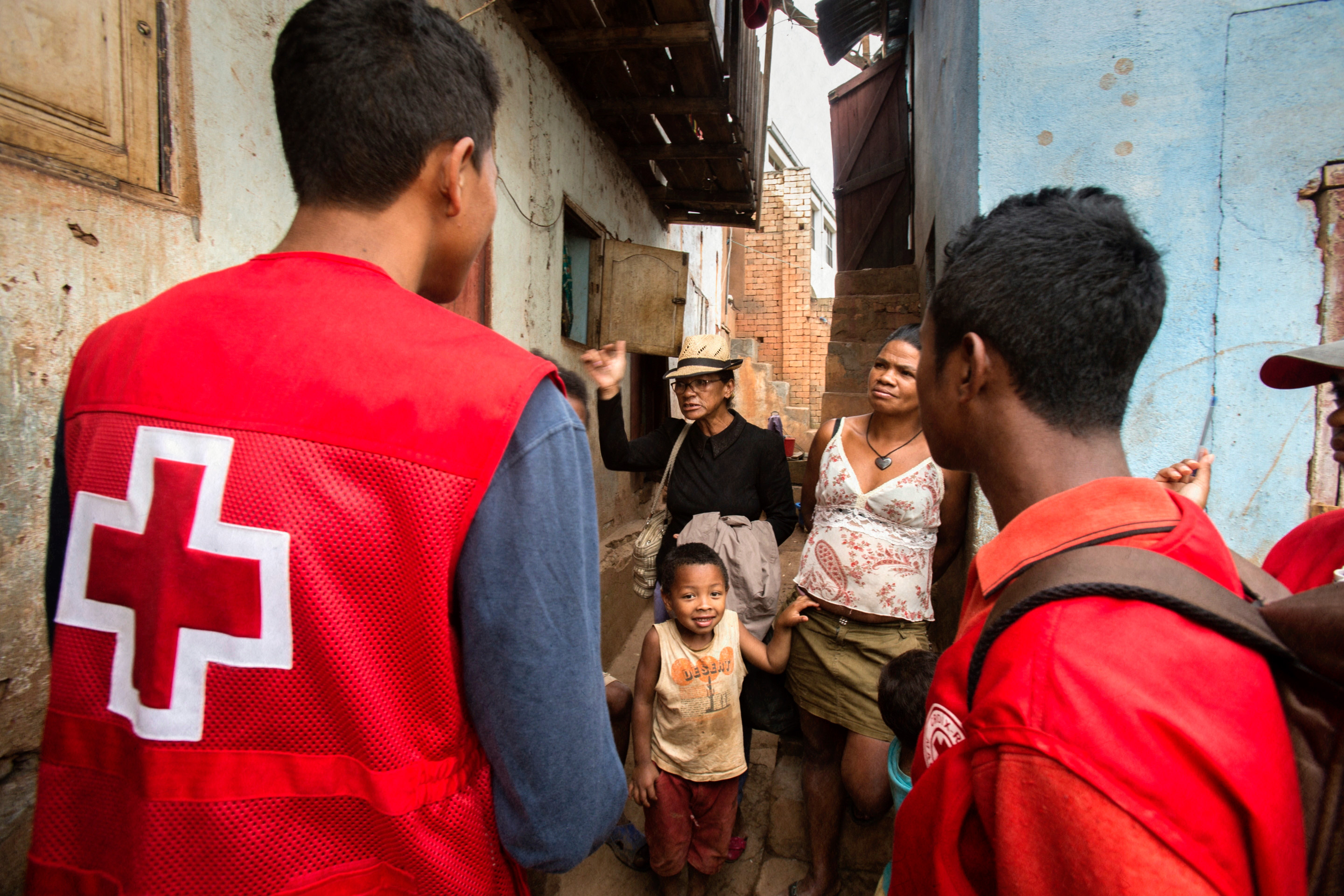
It was August 2017, and enjoyable and breezy in the main mountains of Madagascar. The travelers filling their bags into the minibus leaving Ankazobe, a village in the highlands, were grateful for the early morning coolness. It would be warm and sticky on the journey they were requiring to Antananarivo, the island’s million-person capital 100 kilometers to the south, and after that to Toamasina on the coast, another 350 kilometers away. Among the guests, a 31- year-old guy, looked uneasy currently. 4 days in the past, he had actually gotten here on a see. Now he was headed house, however he was feverish, throbbing, and shaking with chills.
He never ever made it. The guy passed away in the minibus after it drove through the capital; the worried chauffeur dropped his body off at a health center and after that continued towards the coast.
Within days, 31 individuals connected to the taxi journey and the healthcare facility fell ill, and 4 passed away. 2 weeks later on, a female without any recognized ties to the journey passed away in the largely jam-packed capital. Soon after, medical professionals found what was eliminating them: afflict. By early October, there were 169 cases spread throughout the island country. By the end of the month, there were more than 1,500
Little break outs of afflict take place every year in Madagascar, transferred by fleas that survive on rats whose numbers boom after the rice harvest. This was not like those break outs. It showed up prior to the harvest was over. It spread out mostly in cities, not the countryside. And, crucial, it wasn’t bubonic afflict, the traditionally feared however really not really infectious kind of the illness. Rather, it was pneumonic: extremely infectious, transferred by coughing and breathing, and deadly within 24 hours if not dealt with immediately.
With $1.5 million in emergency situation help and 1.2 million dosages of prescription antibiotics from the WHO, Madagascar handled to consist of the epidemic. By the time it decreased, at the end of November, it had actually triggered 2,348 cases and 202 deaths. Still, epidemiologists understood having actually evaded a disaster– not even if the fast-moving, possibly deadly health problem might have spread out worldwide.
Twenty years previously, in a little seasonal break out, Malagasy and French scientists had actually found a pressure of afflict that was resistant to nearly all the prescription antibiotics utilized versus it. If that pressure had actually been accountable for the 2017 break out, it would have been untreatable. The outcome might have been as grim as the afflict upsurges of the past: the Manchurian Plague that eliminated 60,000 individuals in China in 1910; the Justinian Plague that destabilized the Byzantine Empire in 540; the Black Death, which eliminated an approximated 50 million and eliminated half the population of Europe.
AP PHOTO/ALEXANDER JOE
Such a disaster would not have actually amazed the worldwide circle of researchers who keep an eye on the bacterial world’s nonstop resist the prescription antibiotics we utilize to include it. While covid-19 drew our attention to the hazard of infections, microbiologists have actually long fretted that we have actually forgotten the hazard of bacterial upsurges, and the looming threat that germs will end up being resistant to the drugs we trust.
” Antimicrobial resistance might not appear as immediate as a pandemic, however it is simply as harmful,” Tedros Adhanom Ghebreyesus, director-general of the World Health Company, stated in November, calling it “among the best health dangers of our time.”
In 2014 the Evaluation on Antimicrobial Resistance, a research study group created by the British federal government, approximated( pdf) that antibiotic resistance eliminates 700,000 individuals around the globe each year, a number that was scary then however appears little in contrast to the spiraling losses of covid-19 The scientists likewise anticipated that if absolutely nothing was done, the death rate by 2050 would reach 10 million per year– practically 3 times covid-19’s toll so far.
To put it simply: covid took us by surprise, however we currently understand another health crisis is coming, and now we understand how to handle it.
The reaction to covid-19 reveals what can be achieved when focus, decision, and huge quantities of cash are all directed at one target. The pandemic rearranged the daily practice of science, the rate of medical trials, and the desire of federal governments to offer funds for that work. With a comparable effort used to antibiotic resistance, we may rearrange trial style, produce brand-new monitoring networks to find resistant pathogens as they emerge, and create brand-new methods to money drug advancement.
Or, to state this more just: we require to deal with antimicrobial resistance as an emergency situation too. Due to the fact that it currently is.
The mathematics of prescription antibiotics
It is dizzying to recall 18 months, to prior to the pandemic started, and keep in mind that covid-19 had actually never ever been seen previously– and for that reason there were, naturally, no vaccines versus it. What we have actually accomplished by now– with 8 vaccines authorized, practically 100 more in trials, and more than 2.7 billion dosages administered worldwide— was possible just since amazing quantities of financing were designated and guidelines were altered to make it much easier to produce drugs.
The United States federal government provided $18 billion to Operation Terminal velocity to money vaccine and treatment research study and production. It structured medical trials, enabling vaccines to get in the marketplace without complete approval from the Fda. And it consented to acquire approximately 900 million dosages of vaccine from 6 business if their solutions passed FDA examination.
” Antimicrobial resistance might not appear as immediate as a pandemic, however it is simply as hazardous.”
Tedros Adhanom Ghebreyesus, director-general of the World Health Company
Those grants and guarantees ensured the vaccine producers an earnings, while easing them of nearly all the monetary dangers of drug advancement. Drug makers typically speak about browsing the “valley of death,” the difficult-to-fund space in between making an appealing discovery and concluding medical trials. Operation Lightning speed took the valley and laid a six-lane suspension bridge over it.
Prescription antibiotics makers take a look at these assurances wistfully. It’s difficult to make a profit on brand-new prescription antibiotics– even ones that might handle a bacterial pandemic. Prescription antibiotics are more affordable than other drugs offered in the United States, however medical facilities and doctors feel pressure to utilize them conservatively to keep resistance from emerging.
Those 2 impacts integrate to keep profits so low that nearly all the companies that produced prescription antibiotics in the 20 th century have actually left the sector. The last brand-new household of prescription antibiotics was an item of those big-company research study programs; it debuted in 2003.
The space they left has actually been filled by little biotech business, with little personnels and a little number of items. In some cases they have actually no authorized drugs in production at all, leaving them exposed to a 2nd valley of death: the one in between attaining licensure and making adequate earnings to be sustainable. Many do not make it. Given That 2018, several little business making brand-new prescription antibiotics– consisting of Achaogen, Aradigm, Melinta Rehabs, and Tetraphase Pharmaceuticals– have actually declared bankruptcy or sold their possessions.
The mathematics that discusses why is straightforward. It uses up to $1.5 billion to shepherd an antibiotic all the method through approval, however the typical earnings from a brand-new drug is simply $46 million a year. The Evaluation on Antimicrobial Resistance has actually approximated that a brand-new antibiotic does not reach success till 23 years after its advancement. That’s 13 years after going on sale, and simply 2 years prior to generic variations can contend versus it. Many little business merely can’t manage to wait that long.
” Financiers take a look at this and state: ‘Why should I put cash in a business that is not going to have the ability to see a roi?'” states Ramani Varanasi, who was president and CEO at X-Biotix Therapies till it closed down its research study programs in April.
Operation Lightning speed resolved that issue for covid by tossing cash at research study groups that had actually made it through on crumbs. The concern is whether a Lightning speed for unique prescription antibiotics might discover assistance to do the very same.
” You can constantly delay purchasing tunnel upkeep, till the day the tunnel stops working,” states Kevin Outterson, a Boston University law teacher who established and leads CARB-X, a not-for-profit that has actually collected practically $500 million in humanitarian and federal government funds to support early-stage prescription antibiotics research study. “Antibiotic efficiency resembles that: It’s something that is important to all of society, and if we do not make these financial investments to keep it up, we’ll regret it.”
Growing resistance
Antibiotics date to Sir Alexander Fleming’s serendipitous discovery in 1928 that a compound excreted by mold on his lab plates was eliminating the germs he had actually cultured there. The mold was producing the raw variation of penicillin, which after a years of more research study was developed into the very first contemporary antibiotic.
Prescription antibiotics are intricate particles that disrupt cellular recreation in a variety of methods– substances that are made by organisms to take on other organisms. By embracing them for human usage, medication entered the middle of a limitless evolutionary fight in which germs both produced weapons versus each other and established defenses versus those weapons. Fleming comprehended this. In 1945, 3 years after penicillin was very first dispersed to soldiers in The second world war, he forecasted that bacterial development– antibiotic resistance– would ultimately weaken the brand-new drugs. He stated at the time that the only treatment was to utilize them conservatively, so that the bacterial world would be sluggish to adjust.
For the very first couple of years after penicillin’s intro, bacterial adjustment and drug discovery leapfrogged each other, keeping prescription antibiotics’ capability to deal with infections in front of pathogens’ ability at averting them. By the 1970 s, that midcentury burst of development had actually faded. Making prescription antibiotics is difficult: the drugs need to be nontoxic to human beings however deadly to germs, and they should utilize systems that harmful germs have not yet developed defenses versus. Moving from prescription antibiotics produced in nature to manufacturing substances in a laboratory was even harder.
MS TECH|GETTY
Resistance, on the other hand, jumped ahead. Overuse in medication, farming, and aquaculture spread prescription antibiotics through the environment and enabled microorganisms to adjust. In Between 2000 and 2015, usage of the prescription antibiotics that have actually been booked for the most deadly infections practically doubled around the world. Levels of resistance vary by organism, drug, and place, however the most extensive report done to date, released in June 2021 by the WHO, demonstrates how quickly the scenario has actually altered. Amongst the pressures of germs that trigger urinary system infections, one of the most typical health issues on the world, some were resistant to a typical antibiotic up to 90%of the time in specific nations; more than 65%of the germs triggering blood stream infections and more than 30%of the germs triggering pneumonia withstand one or more treatments. Gonorrhea, as soon as a quickly treated infection that triggers infertility if left neglected, is quickly establishing resistance to all the substance abuse versus it.
At the exact same time, resistance elements– the genes that manage germs’s capability to safeguard themselves– are taking a trip the world. In 2008, a male of Indian origin was detected in a healthcare facility in Sweden with a pressure of germs bring a gene cluster that permitted it to withstand nearly all existing prescription antibiotics. In 2015, British and Chinese scientists determined a hereditary component in pigs, pork in markets, and health center clients in China that enabled germs to pacify a drug called colistin, called an antibiotic of last option for its capability to take on the worst superbugs. Both those hereditary aspects, hitchhiking from one germs to another, have actually because spread out worldwide.
In the face of drug advancement’s hard economics, antibiotic research study has actually not maintained. In March, the Seat Charitable Trusts examined the international pipeline of brand-new antibiotic substances. The group discovered 43 someplace in preclinical or medical research study phases, it figured out that just 13 were in stage 3, just two-thirds of those would be most likely to make it through to licensure– and none had the molecular architecture to work versus pathogens that are currently the most hard to deal with.
Lessons from Lightning Speed
So what would an Operation Terminal velocity for antibiotic resistance appear like?
The antibiotic pipeline requires an increase in numerous crucial locations: standard research study, trial style, and post-approval rewards. The international reaction to covid produced precedents for all 3.
The initial step would be supporting fundamental research study in the long term. The Moderna and Pfizer-BioNTech vaccines were all set to go less than a year from the very first acknowledgment of human infections. That preparedness came from 10 years of fundamental research study with no particular illness in mind. When covid appeared, Terminal velocity brought the Moderna vaccine to the goal with additional research study financing. (Pfizer didn’t get research study assistance from Lightning speed, however both business got funds for production and production.)
The majority of early research study financing for prescription antibiotics presently originates from a patchwork of financial investment and philanthropy. The very first lesson of the covid reaction might be that standard research study into antibiotic substances requires more assistance, more broadly dispersed– due to the fact that no one understands which research study group will be the next Moderna or BioNTech.
The covid reaction showed regulators’ determination to talk with business and customize trial treatments to get a quicker result. Modifications consisted of enabling scientific trials to drop placebo elements, for instance, or letting individuals understand which substances they got. Antibiotic trials can have a hard time to hire adequate clients, so the possibility of streamlined or smaller sized trials– the kind licensed for rare-disease drugs, for example– might make a distinction in keeping a research study program moneyed.
Antibiotic designers speak about “push” and “pull” rewards. Presses offer sufficient financing to move an antibiotic research study program approximately the point of approval; pulls contribute a 2nd tranche of money that brings a brand-new drug through post-approval marketing, monitoring expenses, and deficiencies in profits till they reach success. The majority of the financing sent out towards antibiotic research study now makes up push rewards, created to kick-start research study.
However Lightning Speed was both push and pull: it consisted of not simply research study assistance however funds for scaling up production and warranties that the vaccines would be purchased. That two-tiered financing structure might set a pattern for a method of supporting brand-new prescription antibiotics enough time to let them discover their footing.
” These are industrial items, however they are likewise public health products that we require to stay practical,” states Phyllis Arthur, vice president of transmittable illness and diagnostics policy for the market company BIO. “They’re expected to be sort of behind glass. Being behind glass suggests that there’s no ROI that makes sense, so you have to do something that records their worth without putting the onus on the industrial market to supply it.”
There are existing propositions that would funnel more money to prescription antibiotics makers, however without the seriousness of an occasion as apocalyptic as the covid-19 pandemic, they have actually not yet won enough public or political assistance to launch.
In the United States, numerous pieces of legislation that might assist are waiting for examination in Congress. One, called the DISARM Act, intends to enhance the marketplace for freshly produced prescription antibiotics by producing monetary rewards that motivate health centers to buy and utilize them. Now, federal government repayment for health center care motivates health-care organizations to utilize less-expensive drugs initially, and more-expensive, more recent drugs if the very first round does not work– a circumstance that cultivates resistance without getting makers the sales profits they require.
We require to deal with antimicrobial resistance as an emergency situation too. Due to the fact that it currently is.
The developers of the 2nd proposition, referred to as the PASTEUR Act, have actually called it a “Netflix for prescription antibiotics.” It proposes federal payments to business that highlight unique prescription antibiotics, as a method of ensuring the drugs’ schedule in the future. (The act is based in part on an antibiotic membership design presented by the federal government of the UK last summer season, which would pay swelling amounts to business at the start of antibiotic research study programs in exchange for surefire access to the drugs once they are established.)
However in the exact same method that Operation Terminal velocity unlocked for more appropriations– the Biden administration devoted $500 million in March to a brand-new nationwide center for forecasting possible upsurges, for instance– the awareness that we are progressively susceptible to bacterial infections may influence even bolder actions. Federal governments might prepare for brand-new prescription antibiotics the method armed forces prepare for brand-new aircrafts and tanks, offering the weapons for envisioned battlegrounds with agreements that extend years into the future.
Brad Spellberg, the primary medical officer of Los Angeles County University of Southern California Medical Center, has actually proposed a various design for antibiotic advancement: enhancing nonprofits that would continually establish brand-new substances however not go through the cost of medical trials.
The point, he states is that business looking for revenue should concentrate on getting one drug at a time through approval– however to beat resistance, society requires several drugs and a foreseeable supply of brand-new ones. “You wish to have a consistent, sluggish drip every couple of years of brand-new required particles,” he states, “so that when there is a brand-new, emerging pathogen, you can pull a drug out of the bullpen and do quick medical trials, the manner in which has actually been finished with covid.”
The boldest concept influenced by the covid reaction may not be about investing in making drugs. Rather, it might be about buying individuals who make them. As huge prescription antibiotics makers left the field and little business crashed, the groups that did the work were separated and lost; nearly all the prescription antibiotics we take in today were established by individuals who have actually because retired, and couple of scientists are contending to change them.
” If you’re an up-and-coming young researcher and you’re taking a look at the huge issues you can deal with, however you comprehend that they need to be funded in some type of method, selecting antimicrobial resistance as the lane you’re going to decrease is practically profession suicide,” states Gerry Wright, director of the Michael G. DeGroote Institute for Contagious Illness Research Study at McMaster University.
If the very first lesson of the covid action was the worth of financing standard research study in time, possibly the last ought to be the worth of discovering scientists– for this pandemic, and for the next one too.
” If I were going to make a huge play, I would purchase individuals,” Wright states. “College student, postdocs, assistant teachers, partner teachers. Pay their incomes. Provide cash to take dangers, due to the fact that fixing this issue will suggest taking massive dangers. There’s no lack of brains. It’s simply a scarcity of chance.”
A peaceful caution
Recently, deaths from covid-19 in the United States topped 600,000 Worldwide, the toll of death from the illness sneaked above 3.8 million. At this minute, cases have actually topped 178 million.
Amongst those huge numbers, it would have been simple to miss out on a little publication that was likewise released recently. In the province of Ituri in the northeast corner of the Democratic Republic of the Congo, health authorities revealed that 19 individuals had actually fallen ill, and 11 individuals had actually passed away. They had pneumonic afflict, the very same illness that had actually eliminated hundreds in Madagascar 4 years earlier. Samples drawn from the victims had actually been delivered to a local laboratory, the statement stated, however there was no instant alert of what they may reveal.
In the avalanche of horror and sorrow triggered by covid-19, the news was hardly the fall of a pebble. It ought to be a suggestion that pebbles can set off avalanches too. Covid was the pandemic that took us by surprise; It will be on us if we enable antimicrobial resistance to do the exact same.


No comments:
Post a Comment